

Too Good to Waste!
Why We Throw Away So Much That Could Be Eaten
Leaves, peels, stalks, and stems are frequently discarded, even though they are perfectly edible and can be both delicious and nutritionally valuable. Yet every carrot, kohlrabi leaf, or fruit peel that goes unused represents wasted resources, including water, energy, and agricultural land.
Interestingly, our perception of what is edible is shaped largely by cultural traditions, food marketing, and learned cooking habits. While certain parts of plants are commonly eaten in some regions or households, they are considered waste elsewhere. A low-waste approach is not about using every last scrap at all costs; rather, it encourages a more conscious use of resources and a greater appreciation for the food we have.
Leafy Greens: An Underrated Part of Vegetables
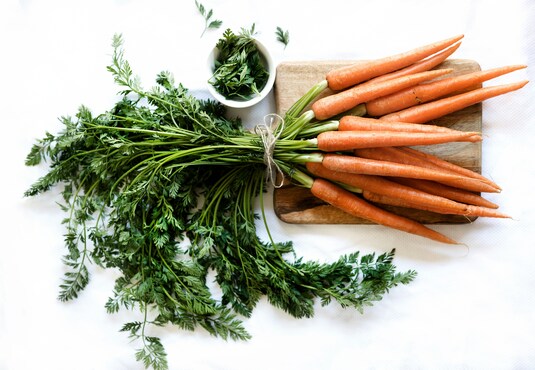
The leafy tops of many vegetables are highly versatile in the kitchen and often contain nutrients comparable to those found in the edible root or fruit itself. Radish leaves, for example, have a pleasantly peppery flavour similar to rocket (arugula) and are delicious finely chopped in salads or blended into pesto. Fresh carrot tops have a mildly herbal, slightly bitter taste that adds depth to vegetable stocks or herb butter. Kohlrabi is also often sold with one or two dark green leaves attached. Similar in texture and flavour to spinach, these leaves are excellent in strudel fillings or sautéed with other vegetables.
Peels: Nature's Protective Layer and a Valuable Source of Nutrients
Peels are often removed simply out of habit rather than necessity. Besides protecting the fruit or vegetable during growth, they frequently contain particularly high concentrations of vitamins, minerals, and other beneficial plant compounds. Kiwi is a good example: after thorough washing, the entire fruit—including its skin—can be sliced or blended into smoothies. Potatoes also do not need to be peeled (although any green or sprouted areas should always be cut away generously), nor do cucumbers, aubergines (eggplants), or courgettes (zucchini). If you do peel them, the skins can still be put to good use—for example, as a nutritious addition to tomato sauce or creamy soups. Even apple peels can be dried and sprinkled over muesli or porridge.
Stalks, Stems, and Cores: More Than Just Kitchen Scraps
The tougher parts of vegetables are often discarded, despite containing many of the same nutrients as the more commonly eaten portions. Broccoli is a perfect example: not only the florets but also the stalk is entirely edible. Whether peeled or unpeeled, raw or cooked, it has a mild flavour reminiscent of kohlrabi and works well in a wide variety of vegetable dishes. It can also be fermented with salt and spices. Likewise, the stems of most fresh herbs are perfectly usable. Finely chopped, they add flavour to salads and sauces, while woody stems such as rosemary or thyme can be simmered whole in sauces or infused in oil to release their aroma.
Low Waste in Summer
The summer season offers countless opportunities to reduce food waste. Leftover grilled courgette slices, a piece of halloumi, and a spoonful of sauce can easily become a delicious wrap the next day—especially when made with wholegrain wraps for an extra boost of fibre. The pale green rind of a watermelon can be transformed into a crisp kimchi by fermenting it with salt, chilli flakes, and spices, or pickled with vinegar, mustard seeds, salt, and sugar much like traditional pickled cucumbers. Even leftover chocolate from an Easter bunny can be melted down and paired with the last strawberries of the season to create irresistible chocolate-dipped fruit skewers.
It Doesn't Have to Be Perfect
A low-waste kitchen is not about turning every meal into a sustainability project. Instead, it encourages us to see our food more holistically and to question long-standing habits. By looking beyond the flesh of fruits and vegetables and appreciating the entire plant as food, we can discover new flavours, textures, and greater culinary variety. After all, a more diverse kitchen is not only created by trying different foods, but also by making fuller use of the ingredients we already have.