

Juicy, sweet, and versatile!
Profile: Peach
The peach (Prunus persica) originally comes from China, where it was cultivated thousands of years ago. Today, it is also grown in Austria – although due to its high heat requirements, mainly in regions with a wine-growing climate, such as Styria, Burgenland, and Lower Austria. A large share of the harvest is consumed fresh, while some is also processed industrially, for example into canned fruit.
Historical sources also indicate traditional use in natural medicine. Hildegard of Bingen, for instance, recommended various parts of the plant – including unripe fruits with the stone, leaves, roots, and bark – for external use in treating ailments such as headaches and gout.
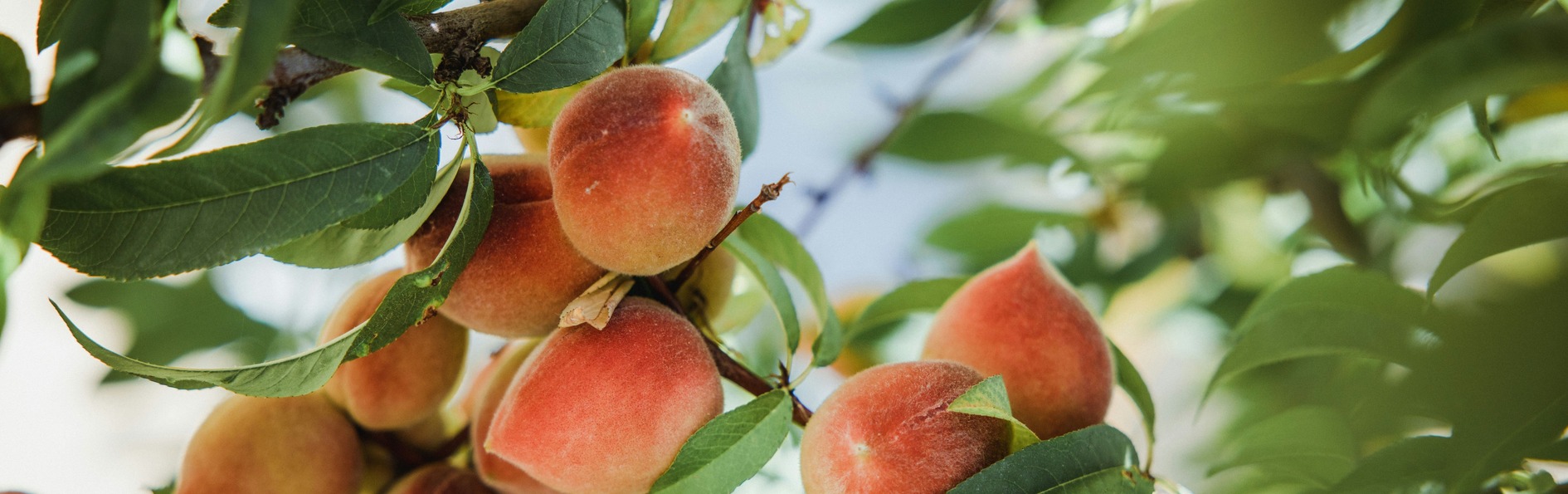
Botanically, the peach is a stone fruit with a diameter of about four to ten centimeters. Its skin can be either fuzzy or smooth depending on the variety and ranges in color from pale green to yellow to reddish-pink. The flesh is juicy, slightly fibrous, and varies from pale to deep orange. Besides classic varieties, so-called flat peaches (Saturn or vineyard peaches) are becoming increasingly popular. Harvesting begins in southern European regions as early as May, while in more northern areas it usually starts only at the end of June.
The Nectarine – Same or Different?
The nectarine is not a separate fruit species but a smooth-skinned, hairless variety of the peach that arose as a natural mutation. Nectarines also come in different flesh and color variations – from yellow to white. One difference lies in composition: nectarines tend to contain less water than peaches, making their flesh firmer and their taste often more intense and sweeter.
Too sweet?
With only 42 kcal per 100 grams, these summer fruits are relatively low in calories. At the same time, they are rich in potassium, vitamin C, fiber, and secondary plant compounds. Despite their sweet taste, their natural sugar content is moderate, although nectarines contain slightly more fruit sugar per gram due to their lower water content compared to peaches.
Studies suggest that these nutrient-rich stone fruits may have anti-inflammatory and cardioprotective properties. In addition, their bioactive compounds support the digestive system and skin health. Antioxidants help reduce oxidative stress and may potentially lower the risk of certain chronic diseases, including neurodegenerative conditions.
Regarding peach nectar, it is worth noting: it must contain at least 50% fruit, with water, sugar, and citric acid added. Producing 100% juice (without additives) is not feasible because the pulp would be too thick. As pure pressed juice, it would also be too low in acidity and not very sweet.
For canned fruit or compote, it is recommended to choose unsweetened versions.
Versatile use in the kitchen
Peaches and nectarines are suitable not only for fresh consumption or classic preparations such as compote or nectar, but also for creative dishes and savory meals. Combined with olive oil, herbs, and garlic, they develop a balanced mix of sweet and slightly tangy flavors when grilled, pairing well with meat or plant-based sides such as potatoes or grilled vegetables. They also work well as chutneys with halloumi or as part of summer salads.
When buying, peaches and nectarines should smell pleasant and not be too firm, as they only continue to ripen after harvest if they were picked at sufficient maturity. They ripen best next to bananas or apples. Both fruits are sensitive to pressure and should be handled carefully and consumed soon after purchase. Once ripe, they keep only a few days in the refrigerator.
Also important: the kernels of both fruits contain hydrogen cyanide, which can be harmful in larger amounts. Therefore, processing is only advisable under controlled conditions, such as industrial heat treatment. Peach kernels (like apricot kernels) are used, for example, to produce persipan, a cheaper alternative to marzipan.
Conclusion
Peaches and nectarines are not only delicious summer fruits but also provide valuable nutrients at relatively low energy content. Their versatility in the kitchen allows both sweet and savory preparations. Thanks to their vitamins and secondary plant compounds, they can contribute positively to a balanced diet. Choosing regional and seasonal produce also combines enjoyment with sustainability.