

A pink, sweet-and-sour stalk
Rhubarb Profile
The “Rheum rhabarbarum” originally comes from the Himalayas. As early as the Middle Ages, mainly the underground parts of the plant were used to produce medicines. Today, rhubarb is widespread around the world and mainly known as a food.
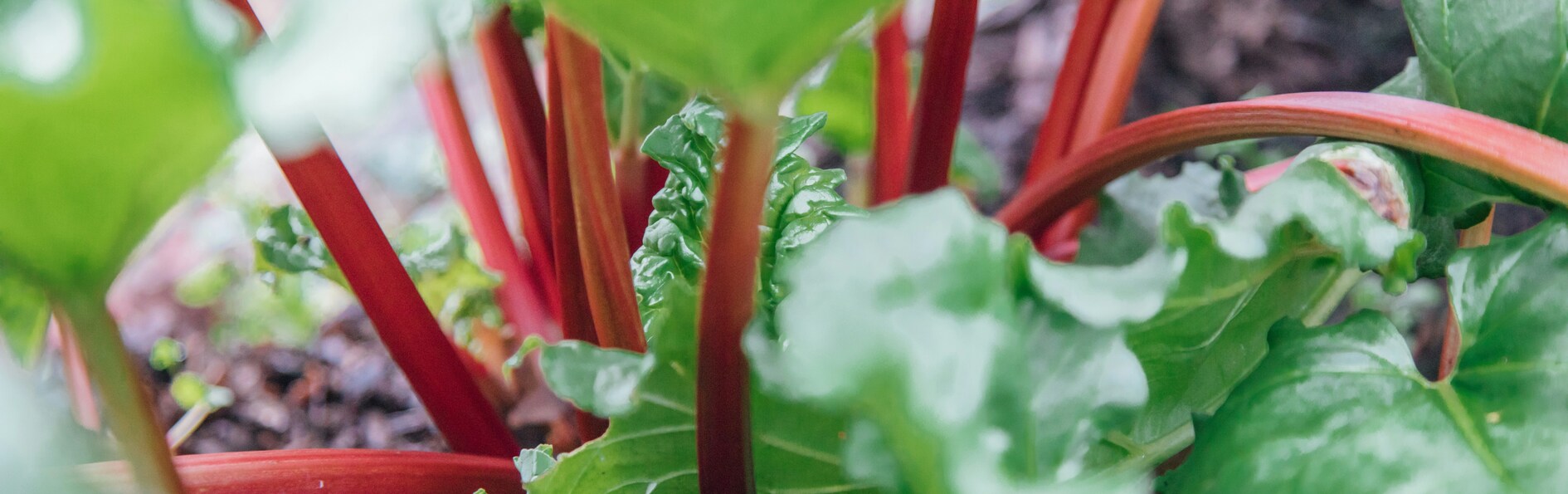
The finely ridged, fibrous, and angular leaf stalk is light green to reddish in color and can grow up to 70 cm long. The harvest season begins around April. As the season progresses, the content of oxalic acid – a potentially harmful compound – increases significantly. When eaten raw, rhubarb can therefore cause symptoms such as vomiting and circulatory problems. This rising oxalic acid content is also the reason why rhubarb should no longer be harvested and consumed from around the end of June – or, according to an old farming rule, only until June 24 (St. John’s Day). After that, the plant enters a resting phase to sprout again the following spring.
Healthy fruit – or actually a vegetable?
Rhubarb is commonly treated like fruit in cooking, although botanically it is a vegetable. With only about 13 kcal per 100 g, it is very low in calories, while being rich in minerals such as potassium, fiber, and antioxidants. Studies also suggest that rhubarb may have various health-promoting properties, including cardioprotective, antibacterial, and potentially anti-cancer effects. A reduced risk of certain metabolic and organ diseases is also being discussed.
Rhubarb in a different way!
Besides classic preparations such as jam, compote, or cake, rhubarb is also used for juice or cider. In gourmet cuisine, it is even used in savory dishes. As a vegetable side or in a tangy chutney, it adds a fresh and slightly sour note to fish or goat cheese, for example.
Fermented versions are also becoming more popular: rhubarb can be processed similarly to sauerkraut or added to kombucha (fermented black or green tea). Fermentation produces probiotic lactic acid bacteria, which can be beneficial for gut health.
Due to its fibrous structure, rhubarb is usually peeled – similar to white asparagus – and the woody ends are removed. Since it is hardly edible raw, it should always be cooked. This also reduces part of its oxalic acid content.
Good combinations
The oxalic acid in rhubarb can inhibit calcium absorption in the body, as it binds to the mineral and is then excreted. People with kidney conditions should be especially careful, as these compounds can accumulate in the kidneys and potentially contribute to kidney stone formation. When shopping, it can be useful to choose red rhubarb varieties, as they naturally contain less oxalic acid. However, in normal consumption amounts, the content is harmless – especially when the rhubarb is cooked.
It is generally advisable to combine rhubarb with calcium-rich foods such as dairy products, nuts, seeds, or tofu. A rhubarb cake, for example, benefits from ingredients like milk or almonds. If rhubarb is eaten as jam, it pairs well with a dairy product at breakfast. As juice, it is best consumed with a meal rather than on its own.
Conclusion
Rhubarb is a versatile, nutrient-rich spring vegetable with a refreshing taste and health-promoting properties. Enjoyed in moderation and properly prepared, it is well tolerated by healthy adults and children. When combined in a varied way, it can be easily integrated into a balanced diet.