

Native power root with natural sweetness
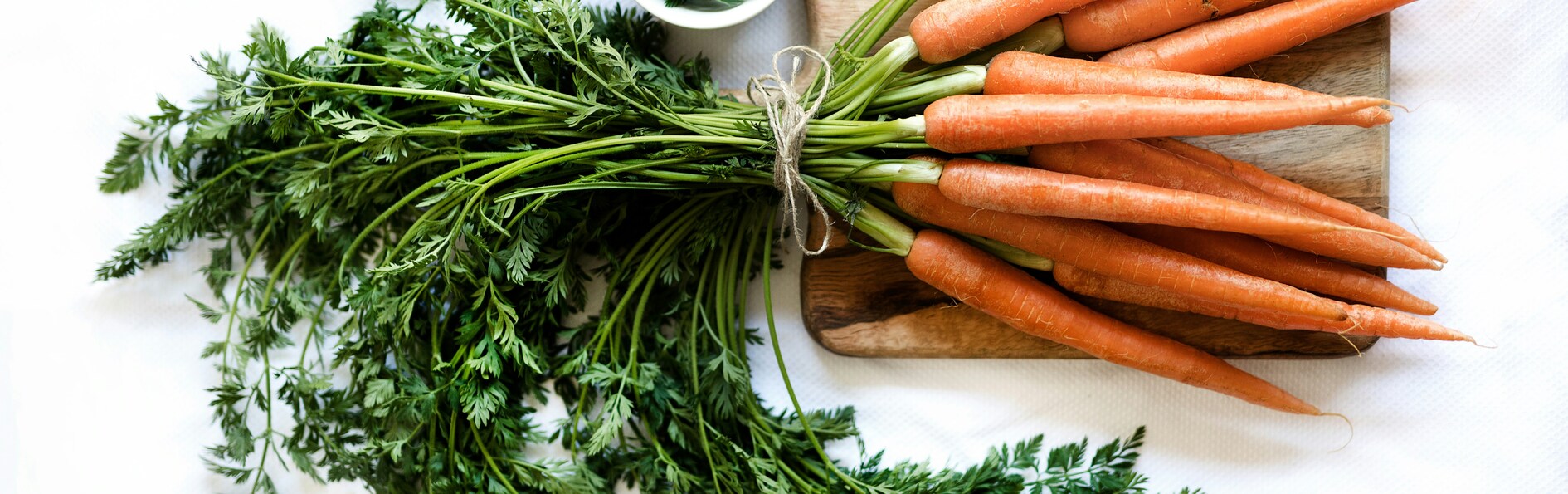
Botanically, the carrot (Daucus carota subsp. sativus) belongs, like dill, parsley, and celery, to the Apiaceae family (umbellifers). It originates from various wild forms and the giant carrot. These were already cultivated in Asia in the early Middle Ages and were later introduced to Europe in the 15th century. It is believed that Dutch breeders crossed purple varieties with white carrots, which eventually led to the widespread orange color. Today, the elongated root is usually orange, more rarely yellow or purple, and can weigh up to 80 grams per piece. The new harvest is available from May onwards – fresh, sometimes even with the leafy greens attached. However, carrots are available all year round.
Regional and Affordable Superfood
Carrots provide a wide range of valuable nutrients, including minerals such as potassium, as well as beta-carotene, vitamin A, and vitamin C. At the same time, due to their high water content, they are low in calories, while their high fiber content supports digestion.
A special highlight is their carotenoid content, including beta-carotene, which is converted into vitamin A in the body. Carotenoids give carrots their characteristic color and have numerous health-promoting properties – including antioxidant effects. This is particularly important for eye cells, which are constantly exposed to light and therefore free radicals and oxidative stress. A diet rich in carrots cannot cure vision defects, but it can help maintain normal vision and prevent deficiency-related problems.
Economically, carrots are also very attractive: with an average price of under one euro per kilogram – around 1.50 euros in organic quality – they are among the most affordable locally grown vegetables.
Proven Support for Digestion
Carrots have long been used as a home remedy for diarrhea. During cooking, special sugar molecules form that can bind pathogens in the gut and promote their elimination. At the same time, carrots provide fluids and electrolytes that the body loses during diarrhea. The fiber pectin also helps stabilize stool consistency.
At the same time, carrots are among the vegetables that can help prevent constipation. Their high digestibility is also the reason why they are among the first foods introduced during infant weaning.
Studies also suggest that regular carrot consumption may be associated with lower cholesterol levels and a reduced risk of cancer.
Eating Carrots with Fat
Beta-carotene is a fat-soluble precursor of vitamin A. In order for the body to absorb it efficiently, it should be consumed together with dietary fats. From a nutritional point of view, it is therefore beneficial to eat carrots with a fat source such as high-quality plant oils or nuts. A few drops of oil are also recommended for carrot juice. However, this is not necessary if the juice is consumed as part of a meal that already contains fat. Due to its relatively high natural sugar content, carrot juice should always be enjoyed mindfully and in moderation.
Carrots in a Different Way
Their mildly sweet taste makes carrots a true all-rounder in the kitchen. Beyond their classic use as soup and side vegetables, they work just as well raw and grated in salads, in freshly pressed juices and nutrient-rich smoothies, as well as in sweet dishes. In oatmeal, cakes, or muffins, they add natural sweetness and moisture.
Have you ever tried grated carrot with cinnamon and nuts in your breakfast porridge? Or oven-roasted with balsamic vinegar and a touch of honey as an aromatic side dish? They also fit perfectly into Asian cuisine – for example combined with sesame, coriander, and spring onions.