

The Balanced Plate: Healthy Eating Made Simple
What Our Bodies Need Every Day
Whether it’s low carb or high protein, nutrition trends often focus on individual nutrients. In doing so, it’s easy to lose sight of what really matters: our bodies need a variety of nutrients that work together and serve different purposes.
• Carbohydrates are an important source of energy for the brain and muscles. They can be found in foods such as bread, rice, pasta, potatoes and oats. Wholegrain products also provide vitamins, minerals and fibre, which support digestion and help us feel fuller for longer.
• Protein is an essential building block for muscles, organs and tissues. It also plays an important role in the production of enzymes and hormones and supports the immune system. Good sources include eggs, dairy products, fish, meat, legumes such as lentils and beans, and soy products like tofu. Nuts, seeds and whole grains also contribute to our protein intake.
• Fat does more than provide energy. It helps protect our organs and is essential for absorbing fat-soluble vitamins A, D, E and K. Whenever possible, choose healthy sources of fat such as plant-based oils, including rapeseed and olive oil, as well as nuts and seeds, which provide valuable unsaturated fatty acids.
In addition, foods provide us with vitamins, minerals and plant compounds that are essential for many bodily functions and help support our overall health. These nutrients are particularly abundant in plant-based foods, which offer a wide variety of colours, flavours and textures. Vegetables, fruit and wholegrain products also provide fibre.
The more varied our food choices, the better our chances of getting all the nutrients our bodies need. But how do we know what the right proportions are? A good place to start is with our plate.
Finding the Right Balance on Your Plate
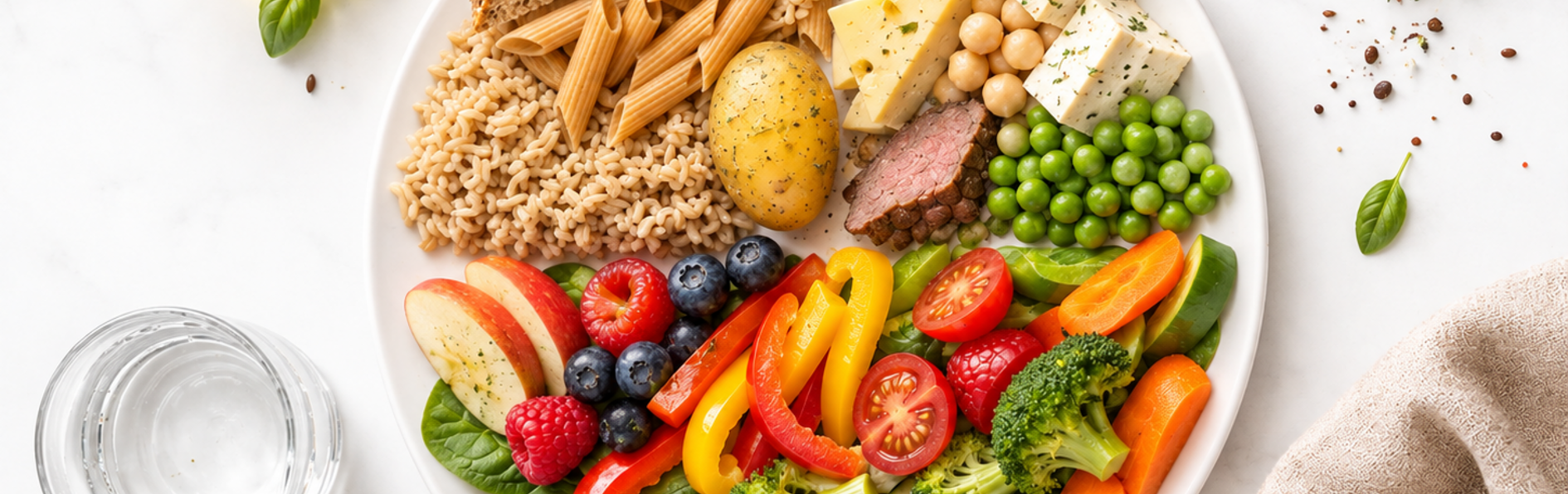
The good news is that eating a balanced diet doesn’t require complicated calculations or strict rules. The plate model offers a simple visual guide to help you choose appropriate portions and create balanced meals.
Half of the plate: Vegetables and fruit
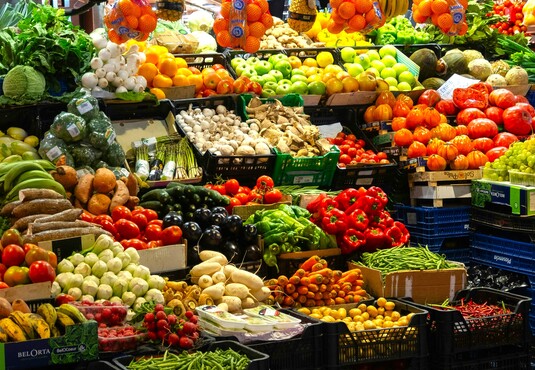
Whether it’s a fresh salad, crunchy raw vegetables, roasted vegetables or a serving of fruit for dessert, half of your plate should be filled with vegetables and fruit. The more colourful and varied your choices, the better.
One quarter of the plate: Carbohydrate-rich foods
Potatoes, rice, pasta, grains, oats or bread should make up around a quarter of your meal. Whenever possible, opt for wholegrain varieties, as they provide more fibre and additional nutrients.
One quarter of the plate: Protein-rich foods
The remaining quarter is reserved for protein sources such as legumes, tofu, eggs, dairy products, fish or lean meat. Plant-based protein sources can take centre stage more often, while animal-based foods can be enjoyed in smaller amounts and less frequently.
And what about fat?
Fat is already present in many foods, including dairy products, fish, meat and nuts. It also comes into play when we prepare our meals. The quality of fat is just as important as the amount we consume. High-quality plant oils, for example, can be added to salad dressings or used for cooking to complement a balanced meal.
How to Make It Work in Everyday Life
These examples show just how easy it is to put the plate model into practice:
• A breakfast bowl of muesli or porridge with yoghurt or milk, a handful of nuts and fresh fruit. A small glass of 100% fruit juice can also be included.
• Stir-fried vegetables with wholegrain rice and tofu.
• Wholegrain pasta with lentil and tomato sauce, served with a fresh salad.
The same principle can also be applied to soups, stews and sandwiches. You don’t need to follow the model perfectly for every meal – it’s simply a helpful way to think about balance.When planning your meals, ask yourself three simple questions:
• Does my meal include enough vegetables or fruit?
• Is there a satisfying source of carbohydrates?
• Does it contain a protein-rich food?
If something is missing, it’s often easy to add it. A handful of raw vegetables, a side salad, a wholegrain accompaniment or a serving of legumes can make all the difference.
The Bottom Line: Balance, Not Perfection
Eating well doesn’t have to be complicated. A healthy diet isn’t about creating the perfect meal every time, but about building habits that work for you over the long term.
The plate model makes it easier to put together balanced meals by providing a simple guide to portion sizes and helping us include a variety of nutritious foods.
Ultimately, it’s not about getting every meal exactly right. It’s about finding a balance that feels good, works in everyday life and supports your health in the long run.