

Prune Plum and Plum: Two Blue Sisters with Powerful Benefits
Related, but Not Identical
The true prune plum (Prunus domestica subsp. domestica) is, strictly speaking, a subspecies of the plum (Prunus domestica), which also includes greengages and mirabelles. All of them belong to the rose family (Rosaceae). Despite their close relationship—and although in Germany the term “Pflaume” is often used to include prune plums as well—the two fruits differ clearly in shape, taste, and use.
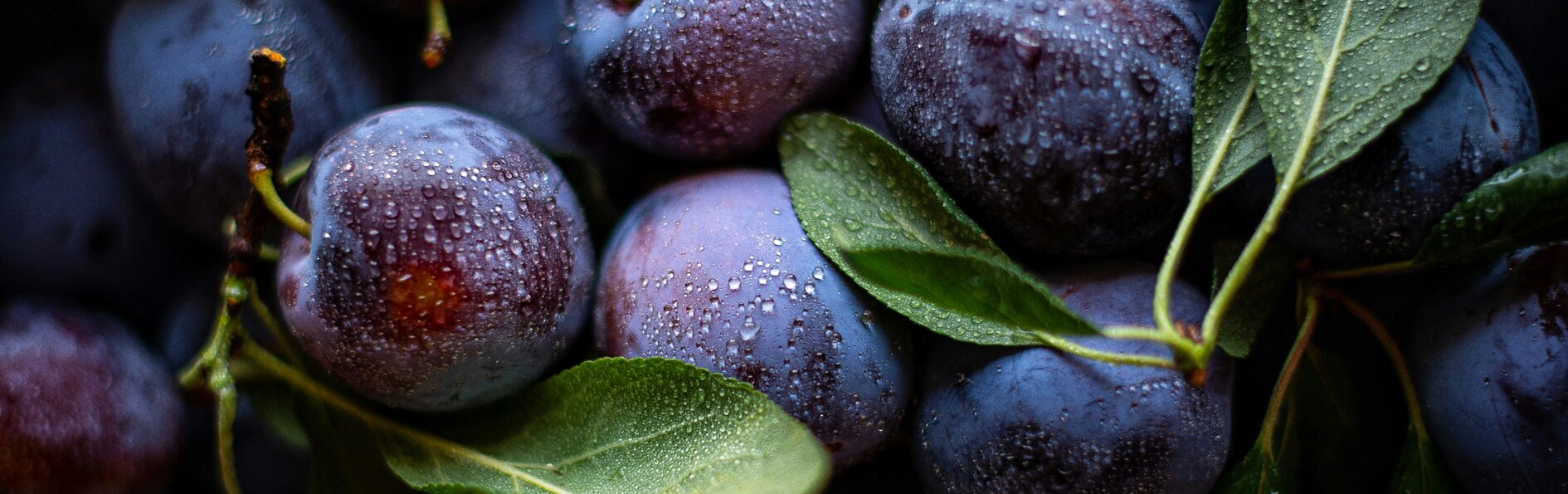
The prune plum is elongated and oval, deep blue to violet in color, and usually has a fine, matte skin. The white coating on the skin protects the fruit from drying out. Its flesh is firm, aromatic, sweet-tart, and separates easily from the stone—making it ideal for cakes such as the classic prune plum tray bake, or for preserving as compote or jam.
The plum, by contrast, is rounder, often shinier, and juicier. Its flesh is softer and usually more difficult to separate from the noticeably smaller stone. It tastes milder and sweeter, making it excellent for compote, fruit salad, or juice. Unlike the prune plum, the plum has a side groove known as the fruit seam.
Both varieties originally come from the Caucasus region and Western Asia. They reached Europe via Persia and the Mediterranean already in ancient times. Today, they are firmly rooted in Central European fruit culture and are available fresh until late autumn, as well as especially popular dried fruits during Advent.
Small Fruits with Big Benefits
Prune plums and plums are quite similar in nutritional value. They are low in calories yet rich in nutrients: 100 grams provide only around 45 kilocalories, while supplying valuable fiber, potassium, iron, zinc, vitamin C, and provitamin A.
Their fiber content is about 2 grams per 100 grams. Ancient Greek physicians in the first century AD already described the digestive benefits of plums. Today we know this is linked to their high fiber content: the swelling properties of these fibers stimulate intestinal movement and support digestion in a gentle, natural way.
Particularly noteworthy is their content of anthocyanins—the blue plant pigments that give the fruits their intense color.
Anthocyanins – A Blue Protective Shield
The anthocyanins found in prune plums and plums belong to a group of plant compounds with strong antioxidant properties. They help protect our cells from oxidative stress caused by environmental pollutants, smoking, inflammation, or intense physical strain.
Studies have shown that a diet rich in anthocyanins is associated with a lower risk of cardiovascular disease. Anthocyanins and their breakdown products also have anti-inflammatory effects, positively influence fat and sugar metabolism, and support the function of blood vessels, the heart, and the brain.
The darker the fruit, the more anthocyanins it contains. Prune plums contain slightly more of these bioactive compounds than plums, which is reflected in their darker, more violet skin.
Fresh, Dried, or as Juice – Enjoyment All Year Round
Prune plums and plums are versatile and perfectly seasonal fruits. While fresh fruit is only available until November, dried fruits and juice remain healthy companions all year long. Processed into purée, compote, or chutney, their sweet-tart flavor can be enjoyed long beyond the season.
During the colder months, dried plums—usually sold as prunes—are excellent in cakes, cookies, and muesli, but also as a fruity addition to savory dishes such as roast goose, game, or cheese platters.
They are true nutrient powerhouses, as removing the water during drying concentrates their minerals and fiber. However, natural fruit sugar also becomes more concentrated, so portion size should be considered in a sugar-conscious diet.
Especially valuable is the naturally occurring sugar alcohol sorbitol, which, together with fiber, gently stimulates bowel activity.
Practical tip: Soak dried plums overnight in water or fruit tea. By morning, you’ll have a naturally digestive home remedy.
Plum or prune plum juice is also a nutrient-rich option in autumn and winter. Naturally cloudy direct juice in particular delivers concentrated plant compounds.
Final Wellness Tip for Cold Days: Slightly warmed and enjoyed with a pinch of cinnamon or mulled spice, this blue-violet fruit juice is both soothing and digestion-supporting on chilly days.