English - Global
EN
English - Global
EN


From climate targets to actions
Climate protection starts with a clear understanding of where emissions occur and with the commitment to reduce them consistently. At RAUCH, this commitment reached an important milestone when our group-wide climate targets were officially approved by the Science Based Targets initiative (SBTi) in December of 2025. This external validation confirms that our ambitions are aligned with the latest climate science and contribute to limiting global warming in line with the Paris Agreement. But setting targets is only the beginning.
Understanding our impact
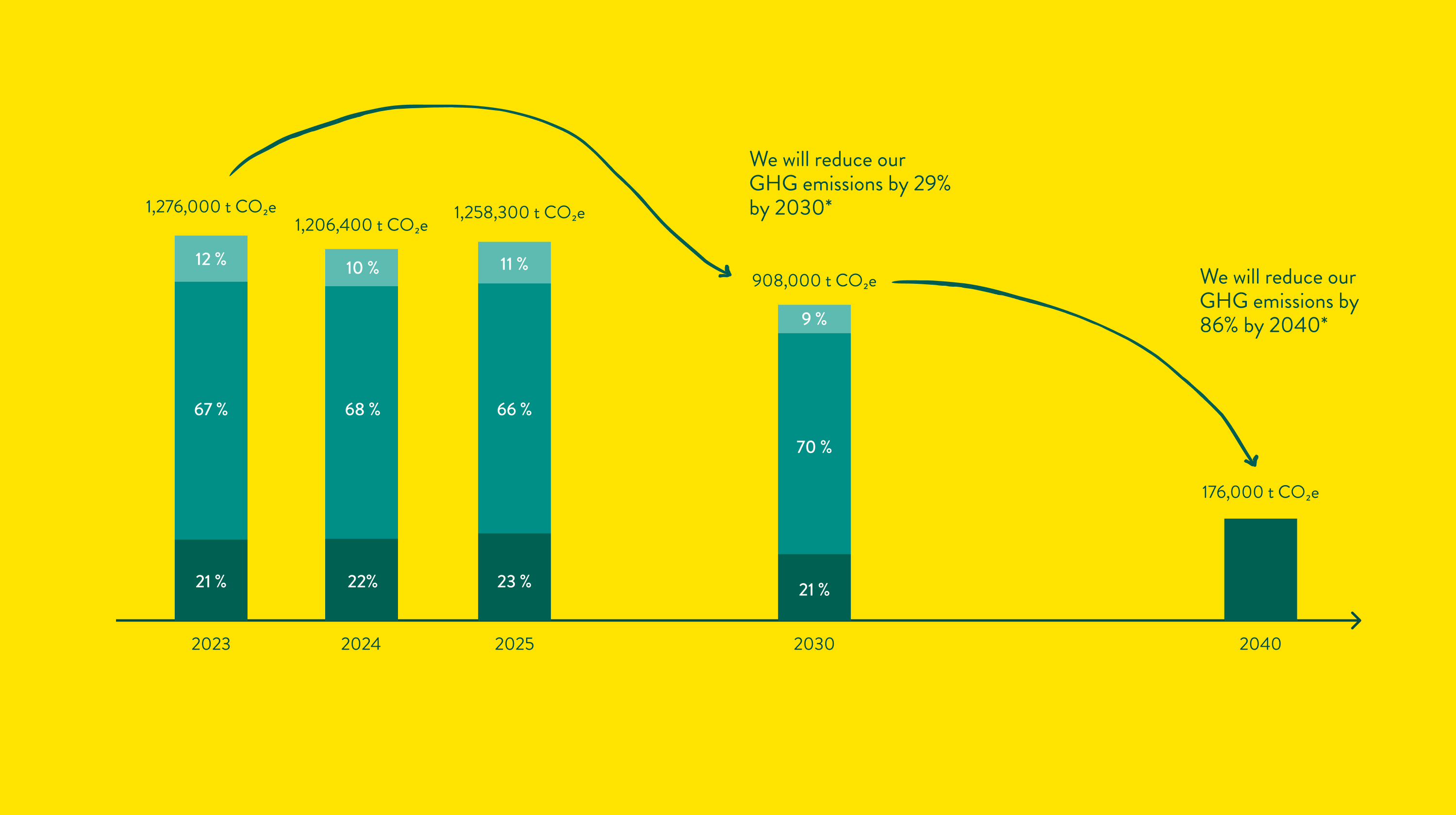
To reduce emissions effectively, you first need transparency. That is why RAUCH has been systematically calculating its Corporate Carbon Footprint since 2021. This includes emissions across our own operations (Scope 1 and 2) as well as along the entire value chain from purchased goods to logistics (Scope 3) and emissions from land use and agriculture (FLAG). This comprehensive view allows us to identify where emissions occur, track progress over time and define targeted measures. Today, it is clear that the majority of emissions are located beyond our own production sites, particularly in the upstream supply chain. Understanding these dynamics is a key prerequisite for meaningful climate action.
Setting clear science-based targets
Based on this transparency, RAUCH has defined concrete, science-based reduction targets. With our baseline year set for 2030, we have committed to the following targets:
Near-term targets
- Reduction of absolute GHG emissions from Scope 1 and 2 by 47,1% by 2030
- Reduction of absolute GHG emissions from Scope 3 by 25,0% by 2030
- Reduction of absolute Scope 1 and Scope 3 FLAG GHG emissions by 30,3% by 2030
Long-term targets
- Reduction of absolute GHG emissins from Scope 1, 2 and 2 by 90,0% by 2040
- Reduction of absolute Scope 1 and Scope 3 FLAG GHG emissions by 72,0% by 2040

Further information on our approved science-based targets is available on SBTi website.
From targets to roadmap
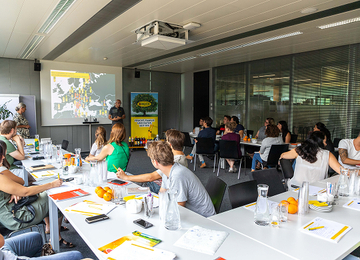
Climate protection is not limited to individual measures, it is a structured long-term process. Therefore we are currently developing a comprehensive decarbonization roadmap. This roadmap translates our climate goals into concrete measures across all areas of the company. It is being developed in close collaboration with colleagues from different functions and production sites, ensuring that solutions are practical, effective and anchored in operations.
Driving the transformation
Our SBTi-approved targets provide direction, the carbon footprint creates transparency and the decarbonization roadmap translates both into concrete steps. Together, they form the foundation of our climate strategy. Through consistent action, cross-functional collaboration and the willingness to improve we aim for climate protection.